
You want to travel through Iceland.
You’re on a budget.
But you don’t want to live on instant noodles.
Good news: you don’t have to.
Food is one of the easiest daily costs to control in Iceland. With a bit of planning, you can eat well, stay full, and still enjoy local food without turning every meal into a budget problem. This guide is about smart decisions, not sacrifice.
Grocery stores: the single biggest money-saver
If there’s one tip that makes the biggest difference, it’s this: use grocery stores.
The lowest prices are consistently found at:
- Bónus
- Krónan
- Netto
Compared with eating out every day, shopping at supermarkets cuts food costs dramatically. Buy breakfast and lunch supplies, make your own sandwiches, and you’ll eat comfortably for a fraction of restaurant prices.
A few things worth knowing:
- Alcohol is not sold in supermarkets in Iceland.
- Gas stations sell groceries, but at noticeably higher prices.
- Discount stickers on short-dated food are common and great value if you plan to eat the same day.
If alcohol is part of your trip, planning around store hours becomes even more important, especially on Sundays and holidays. We explain how that works in detail in Alcohol in Iceland: where to buy it and how to avoid overpaying.
Supermarket opening hours: plan around them
Opening hours catch many visitors off guard, especially outside Reykjavík.
In Reykjavík and the capital area, most supermarkets open around 10:00–11:00 and close between 19:00–21:00, with weekend hours varying by store.
In larger towns like Selfoss, Akureyri, and Egilsstaðir, stores usually open around 9:00–10:00 and close between 17:00–19:00, often with shorter hours on weekends.
In smaller towns and rural areas, opening hours are limited. Some stores close as early as 16:00–17:00, and a few close entirely on Sundays.
Sundays and public holidays are where planning really matters. Outside Reykjavík, some supermarkets close completely, and others operate on reduced hours. During long weekends and national holidays, this becomes even more noticeable, especially in smaller towns.
The simple habit that saves money is shopping whenever you pass a larger town, particularly before weekends or holidays. Don’t wait until evening, by then your only option may be a gas station.
What to buy at the supermarket
Forget complicated recipes. You want food that travels well, fills you up, and doesn’t rely on kitchen access.
Good, practical options you’ll find almost everywhere include dried cod or wolffish (fish jerky), which is traditional, high in protein, and surprisingly good with a bit of butter. Flatkökur, Icelandic flatbread, paired with butter and hangikjöt (smoked lamb) make excellent sandwiches. Skyr is filling, healthy, and widely available in many flavours. Krónan often sells cooked chicken that can stretch across several meals. Rye bread, kleinur, and basic sandwich ingredients are cheap, easy, and travel-friendly.
This kind of food is easy to pack, easy to eat on the road, and keeps daily costs low.
The real savings: make your own lunch
This is where budgets are won or lost.
Most experienced travellers fall into a simple rhythm: grocery-store breakfast, packed lunch for the day, and one restaurant meal every few days.
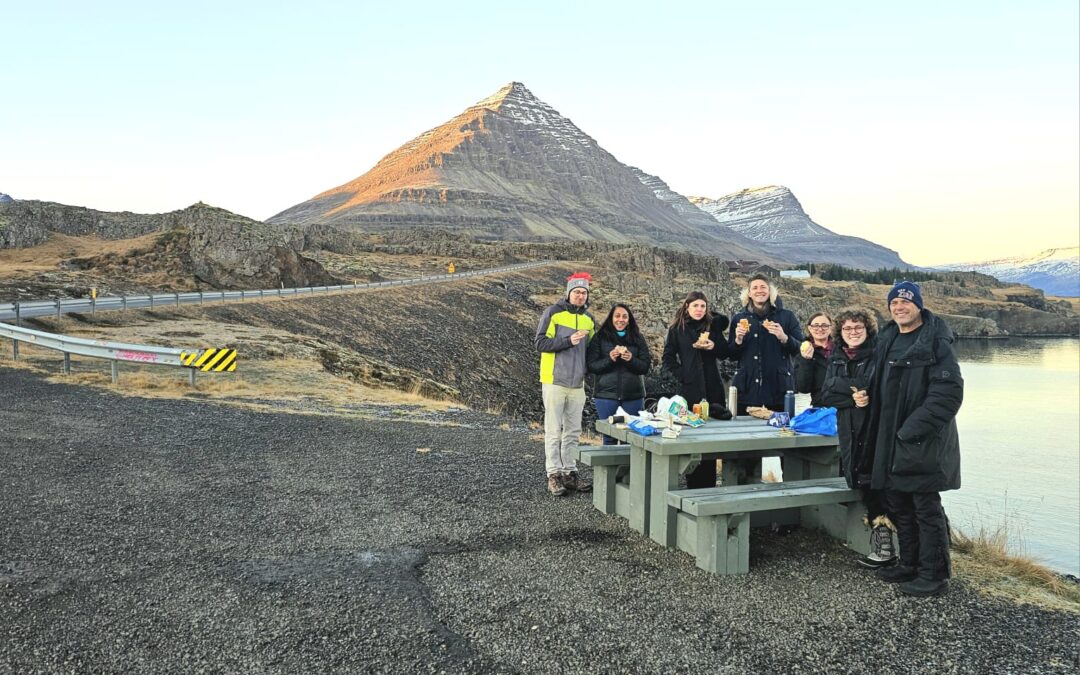
A sandwich beside a waterfall costs almost nothing and often tastes better than a rushed café stop.
Making your own lunch also reduces unnecessary driving back into towns, which quietly saves fuel. We cover that connection in more detail in Fuel prices in Iceland: where to fill up and how to pay less.
One important note: if your accommodation includes breakfast, don’t assume you can pack lunch from the breakfast buffet. In Iceland, taking food away without asking is generally frowned upon and considered poor manners. Some places may allow it or offer takeaway options, sometimes for an extra fee, but always ask first.
Where to buy groceries along the Ring Road
Supermarkets are easy to find if you know the main stops. Smaller villages usually have only expensive convenience stores.
If you’re driving around the Ring Road, look for:
- Hveragerði – Bónus
- Selfoss – Krónan, Netto, Bónus
- Hvolsvöllur – Krónan
- Vík – Krónan
- Höfn – Netto
- Egilsstaðir – Bónus
- Akureyri – Krónan, Bónus, Netto
- Borgarnes – Netto
The stretch between Akureyri and Borgarnes has no large supermarkets, so plan ahead. If you’re heading to the Snæfellsnes peninsula, pack food before you go.
Tap water: don’t buy it
Simple rule: never buy bottled water in Iceland.
Tap water here is clean, cold, and among the best in the world. Bring a reusable bottle or reuse one you already have. You can refill it almost anywhere, including hotels, campsites, gas stations, and public taps.
Buying bottled water is one of the easiest ways tourists waste money.
Gas station food: quick wins and easy traps
Gas stations are convenient but expensive. They’re reliable when everything else is closed, especially on Sundays and holidays, but not ideal for daily meals.
One genuine exception is the hot dog. Available at most N1 and Olís stations, it’s warm, filling, and usually under 1,000 ISK. Add onions, ketchup, mustard, or remúlaði. For the price, it’s genuinely good value.
What’s usually overpriced includes pre-packed sandwiches, soft drinks, and snacks or sweets.
Gas stations are best treated as a backup, not a plan.
Find out more about gas stations, fuel prices and more on: Fuel prices in Iceland: where to fill up and how to pay less.
When eating out is worth it
Eating out in Iceland costs more than many visitors expect, but that doesn’t mean you should skip it entirely.
Some dishes are worth it, especially Icelandic lamb, Arctic char, and traditional lamb soup (kjötsúpa).
One well-chosen restaurant meal can feel like part of the experience and often costs less overall than several rushed or unplanned stops.
On Sundays and holidays, some restaurants reduce hours or close entirely, particularly outside Reykjavík. Popular places can also fill up quickly. If you plan to eat out on those days, booking ahead or having groceries as a backup avoids last-minute, expensive choices.
A note on hotel breakfasts
If your accommodation includes breakfast, don’t assume you can pack lunch from the buffet.
Taking food away without asking is generally frowned upon and considered poor manners. Some places allow it for a small fee, others don’t. Always ask first.
How food planning saves time and money
Planning your meals isn’t just about cost, it makes the whole trip smoother.
You’ll spend less time hunting for open stores or restaurants, avoid expensive impulse stops, and stay flexible when weather or plans change. That flexibility also feeds into better route planning and fewer unnecessary detours, which connects directly to How to save money on car rental and transportation in Iceland.
Final note: Food prices, availability, and store hours vary by location and season. The advice here is based on common travel experiences and practical planning. Always check current opening times and shop before starting your trip, not when you are there and hungry.