
Let’s clear this up first, because this is where most visitors get caught off guard.
Alcohol in Iceland follows its own system. It isn’t sold in regular supermarkets, it has limited opening hours, and prices work very differently from what many travelers expect.
Once you understand how the system works, it’s easy to plan ahead, avoid overpaying, and skip the classic “no alcohol on Sunday” surprise.
This guide is simple: know the rules before you’re thirsty.
What you’ll find in supermarkets (and what you won’t)
You can’t buy regular beer, wine, or spirits in Icelandic supermarkets.
But there are a few exceptions that often confuse visitors.
Available in grocery stores like Bónus, Krónan, and Netto:
- Non-alcoholic beer and wine (0.0%)
- Low-alcohol beer under 2.25% ABV
These products are readily available in the regular beer or soda aisle, grouped with soft drinks. They’re sold to anyone of legal age and cost much less because they’re taxed like soda, not alcohol.
If you want context on grocery shopping, store locations, and opening hours, see Eating on a budget in Iceland: groceries, gas stations, and smart choices.
If you want full-strength alcohol, supermarkets are not the place.
Vínbúðin: Iceland’s only alcohol store
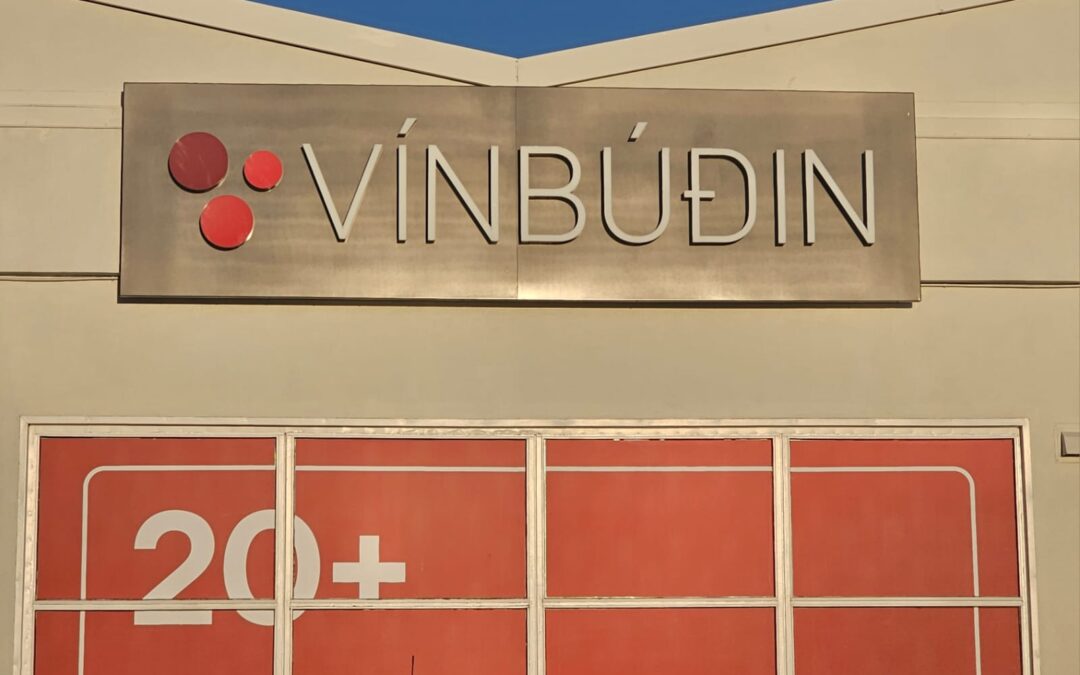
Vínbúðin is Iceland’s state-run alcohol chain and the only store legally allowed to sell full-strength beer, wine, and spirits.
What to know:
- Prices are lower than bars, but higher than duty-free
- Selection is broad, clearly labeled, and staff are helpful
- Closed on Sundays and public holidays
- Opening hours are limited, especially outside Reykjavík
Always check locations and hours before you go: https://www.vinbudin.is
If alcohol is part of your trip, plan around Vínbúðin’s schedule, not after it closes.
Duty-free at Keflavík Airport: your best value stop
If you plan to drink during your trip, duty-free at Keflavík Airport is the cheapest place to buy alcohol in Iceland.
You’ll find it after landing, before baggage claim. Prices are significantly lower than Vínbúðin, although purchase limits apply and are enforced.
Duty-free makes the most sense if you:
- Arrive late or on a weekend
- Have access to a kitchen
- Want wine, beer, or spirits for a few days
Skip it and arrive late on Saturday, and you may wait until Monday to buy alcohol again.
Bars and restaurants: fun, but budget accordingly
Bars and restaurants are licensed to serve full-strength alcohol whenever they’re open, and price it accordingly.
Typical prices:
- 500 ml beer: 1,400–1,700 ISK
- Glass of wine: often close to the price of a full bottle at Vínbúðin
You don’t need to avoid bars entirely. Just pick your moments. An intentional night out costs less, and feels more special, than casual daily drinks.
Rough price comparison
- 500 ml beer from Vínbúðin: from around 400 ISK
- 500 ml beer in a bar or restaurant: usually 1,400–1,700 ISK
- Bottle of wine from Vínbúðin: from around 2,000 ISK
- Glass of wine in a bar or restaurant: often 1,500–2,000 ISK, meaning one glass can cost about the same as an entire bottle from the store
Prices are indicative and based on typical January 2026 averages.
Common misunderstandings
- “Supermarkets sell beer.” → Only low-alcohol versions under 2.25%
- “Gas stations sell alcohol.” → They don’t
- “I’ll just buy some later.” → Not on Sundays or some holidays
- “Bars are cheaper outside Reykjavík.” → Usually not
Knowing this saves time, money, and frustration.
Nightlife in Iceland: weekends rule
Icelandic nightlife is very weekend-focused.
What to expect:
- Most people go out on Friday and Saturday nights
- Bars fill late, often after 22:00
- Drinking at home before going out is common due to prices
- Reykjavík has by far the biggest nightlife scene, smaller towns are quieter
For many visitors, one or two good nights out beats drinking every evening.
Local beers worth knowing
Iceland’s beer scene mixes classic lagers with strong craft brewing.
Widespread favourites:
- Víking Gylltur: the classic golden lager since 1989
- Egils Gull: crisp, balanced, award-winning
- Boli Premium: fuller and slightly stronger
Full-strength versions are sold at Vínbúðin, while light versions (≤2.25% ABV) are available in supermarkets.
Notable craft breweries:
- Einstök: known for its White Ale and glacial water
- Borg Brugghús: bold styles like Úlfur (IPA) and Bríó (pilsner)
- Kaldi: Czech-inspired beers brewed in North Iceland
- Ölvisholt: famous for Lava, a smoked imperial stout
Icelandic spirits and liqueurs
Many Icelandic spirits use local ingredients like birch, caraway, and lava-filtered water.
Highlights include:
- Brennivín: the national caraway aquavit, often called Black Death
- Reyka Vodka: distilled with geothermal energy and lava filtration
- Flóki Whisky: made entirely from Icelandic barley, including a sheep-dung-smoked version
- Icelandic gins: Ólafsson, Himbrimi, and Stuðlaberg
- Birch liqueurs: Birkir and Björk, with earthy, herbal notes
These drinks often appear alongside traditional Icelandic food during festivals like Þorrablót.
Alcohol and driving: zero tolerance
Drink-driving laws in Iceland are strict and heavily enforced.
Important to know:
- Random roadside checks are common
- Even low blood-alcohol levels can exceed the legal limit
- Fines are high and licenses can be suspended
Culturally, there’s no “just one beer if I’m driving”. If you’ll be behind the wheel, skip alcohol altogether.
For more about safe driving in Iceland, see: What you need to know when driving in Iceland.
Also you might want to check: How to save money on car rental and transportation in Iceland and Fuel prices in Iceland.
When drinking out is worth it
Despite the prices, drinking out can absolutely be worth it now and then, a great bar, a special dinner, or a lively Reykjavík night you’ll remember.
As with food, the rule is simple: choose moments, not habits.
Final note: Alcohol prices, regulations, purchase limits, and opening hours in Iceland are regulated and can change, especially around holidays. Always check current information from Vínbúðin or official sources.