
Iceland’s weather is not something to “play by ear.”
Many travel problems here don’t start with bad luck, but with weather warnings being underestimated or ignored.
In Iceland, weather warnings are issued based on impact, not how dramatic conditions look at a given moment. A calm sky, a clear road, or a short break in the wind does not mean conditions are safe.
This guide explains what yellow, orange, and red weather warnings actually mean, so you can make responsible decisions, adjust plans early, and avoid situations that put you, others, or rescue teams at risk.
How weather warnings work in Iceland
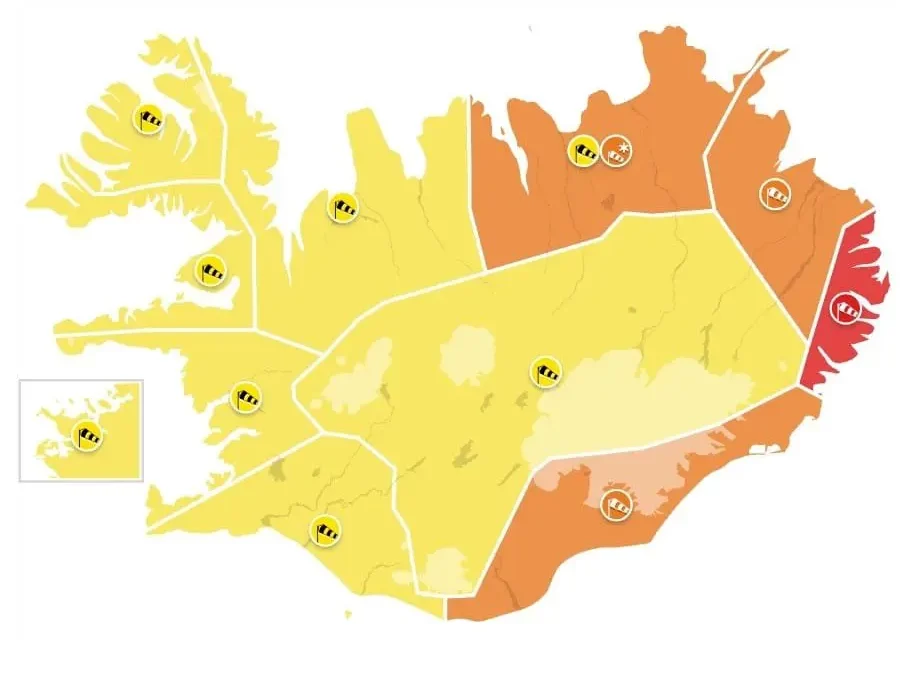
Weather warnings are issued by the Icelandic Meteorological Office (Veðurstofa Íslands) and apply to specific regions, not the entire country. It’s common for one part of Iceland to be under a warning while another is unaffected.
Warnings are colour-coded:
- Yellow
- Orange
- Red
They describe expected impact, not how extreme the weather appears.
Warnings can last from a few hours to several days and are updated as conditions change.
Always check current warnings here: https://en.vedur.is/alerts
Yellow warning: hazardous conditions that require adjustment
Yellow warnings are the most common, and the most underestimated.
A yellow warning means conditions can become hazardous, particularly if you are:
- Driving long distances
- Traveling through exposed areas
- Using a campervan or small vehicle
- Spending time outdoors or stopping frequently
Typical yellow-warning conditions include:
- Strong or gusty wind (often around 20–30 m/s)
- Snow or ice affecting roads
- Reduced visibility
- Rapidly changing weather
These wind ranges are indicative, not fixed thresholds. Warnings are issued based on overall impact, not a single number.
For travelers, yellow warnings mean:
- Driving requires more focus and caution
- Travel takes longer than expected
- Conditions can worsen quickly without much visual warning
Yellow does not mean “everything is fine.” It means slow down, reassess, and be ready to adjust plans. This is why flexibility is essential when driving in Iceland, for other important considerations take a look at What you need to know when driving in Iceland.
Orange warning: significant disruption and elevated risk
An orange warning signals serious conditions that are expected to affect normal travel and daily activities.
This can include:
- Very strong winds (often 30–40 m/s)
- Heavy snow or rain
- Whiteout conditions
- Road closures
For visitors, orange warnings usually mean:
- Driving is strongly discouraged
- Outdoor plans should be changed
- Tours are often cancelled or rescheduled
- Public transport may be limited or suspended
Trying to “push through” during an orange warning is one of the most common causes of accidents and emergency call-outs. Responsible travel means changing plans early, not testing limits.
Red warning: severe conditions, do not travel
Red warnings are rare, but when they happen, they are serious.
A red warning indicates severe weather with a high risk to safety, such as:
- Extreme wind (often 40+ m/s)
- Severe storms
- Major snow events
- Widespread closures
For travelers, the guidance is simple: Do not travel.
During red warnings:
- Roads close
- Public transport stops
- Emergency services focus only on critical situations
Traveling during a red warning puts you at significant risk and increases the likelihood of rescue situations. In Iceland, many rescue operations are carried out by volunteers, not paid emergency staff. Weather warnings exist to reduce situations where their help is needed.
Why wind is often more dangerous than snow
Many visitors focus on snow because it’s visible and familiar. In Iceland, wind is often the greater danger.
Strong wind can:
- Affect vehicle control
- Make short stops physically exhausting
- Cause accidents even on dry roads
- Turn simple tasks into safety risks
This is why warnings matter even when:
- It isn’t snowing
- Roads look clear
- Visibility seems fine
Wind exposure is also why clothing choices matter so much. If your outer layer isn’t windproof, conditions can feel far worse than expected, something we explain in What to wear in Iceland without overspending on clothes and gear.
How weather warnings affect planning and responsibility
Weather warnings are first and foremost about safety.
They exist to prevent accidents, dangerous situations, and unnecessary risk, not to inconvenience travelers or disrupt plans.
Ignoring warnings doesn’t just put you at risk. It can endanger others as well, including rescue teams who may be called out if something goes wrong. Responsible travel in Iceland means accepting that plans sometimes need to change.
Delays, detours, or cancellations are not “bad luck.” They are part of traveling safely in a country where conditions can shift quickly.
Any additional costs that result from changing plans should be expected and planned for, not avoided by continuing in unsafe conditions.
Where to check conditions (make this a daily habit)
Before committing to a driving day or outdoor activity, always check:
- Weather alerts: https://en.vedur.is/alerts
- Regional forecasts: https://en.vedur.is/weather/forecasts/areas/
- Road conditions: https://umferdin.is/en
- Travel safety guidance: https://safetravel.is/
Conditions can change quickly, especially outside summer.
A simple rule that prevents most problems
If there’s one mindset that keeps travelers safe in Iceland, it’s this:
- Yellow → slow down and reassess
- Orange → change plans
- Red → stay put
Locals adjust constantly. Visitors should too.
Final note: weather warnings in Iceland aren’t about panic, they’re about preparation. Conditions can change quickly, and how warnings affect you depends on where you are, what you’re doing, and your own experience and comfort level. The information here is meant as practical guidance, not a substitute for checking current conditions or following official instructions.
Always review up-to-date forecasts, road conditions, and alerts from official sources before traveling, and adjust your plans accordingly. Ultimately, each traveler is responsible for their own decisions on the road and outdoors.