
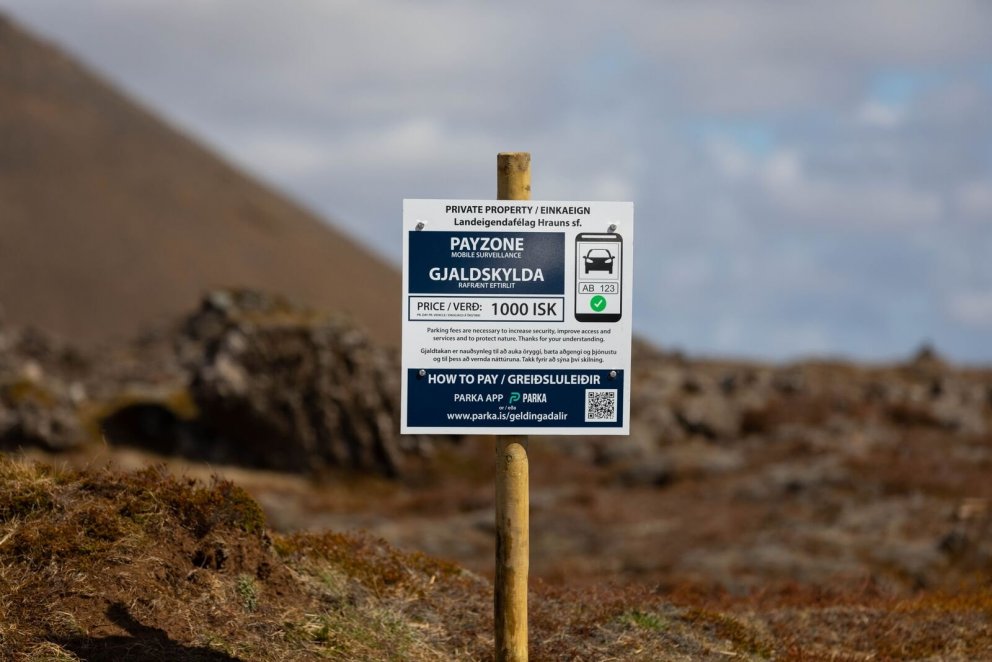
You’ve rented the car, planned the route, and stopped at a beautiful waterfall, only to find a sign saying parking isn’t free.
Parking and small access fees are among the most common surprise costs in Iceland. They’re rarely high, but they’re often unexpected.
This guide helps you understand where they appear, why they exist, and how to avoid fines or last-minute frustration.
Paid parking at nature sites
Paid parking at major natural attractions is now standard in Iceland. You’ll usually see fees at:
- Popular waterfalls
- Busy viewpoints
- Maintained hiking routes
- Sites with toilets or constructed paths
You’re not just paying for a space, you’re contributing to upkeep and access.
Even short stops count. Many systems charge from the moment your license plate is registered, with no grace period.
Why these fees exist
Most natural sites are on private or community-managed land. Parking fees fund:
- Toilets and waste removal
- Path and railing maintenance
- Erosion control
- Road clearing in winter
Without these fees, many popular sites would deteriorate or close. You’re paying to keep them open, not just to park.
How parking systems work
Most paid sites look informal, no barriers, no tickets. Instead, they rely on license-plate recognition.
Common payment options include:
- Mobile apps such as Parka or EasyPark
- QR-code signs linked to payment websites
- Online payment portals
Important details tourists often miss:
- No barrier or payment machine does not mean parking is free
- Signs are usually placed at the entrance, not beside every space
- You usually have a short window, often 15–30 minutes, after arrival to pay
If you don’t pay, or pay incorrectly
Non-payment or small data errors trigger automated fines. Your rental company is then notified, adds an administrative fee, and charges your card.
Tip: always take a screenshot or save the receipt after paying for parking, especially when using apps or web-based systems. This gives you proof of payment if a technical issue occurs or if a rental company later queries a charge.
Common avoidable mistakes:
- Typing the wrong license plate or zone
- Confusing the letter O and the number 0 (zero)
- Assuming payment isn’t needed for a quick stop
- Forgetting to start or confirm the parking session
If something looks wrong, take a screenshot immediately. It’s much harder to fix later.
Timing and return visits
Parking is charged by time or per visit. Returning later the same day often means paying again, because the system registers a new entry.
If you stay longer than expected, reopen the app and extend your session before it expires.
Toilets and small site fees
Some facilities are free, especially those run by local councils or gas stations. Others charge a small fee for toilets or paths, mainly to cover maintenance in remote areas.
At rural and privately managed sites, toilet fees are typically around 200–300 ISK, though prices can vary.
These charges are normal and help keep sites clean and usable.
Free stops still exist
Not every beautiful view charges a fee. You’ll still find free roadside viewpoints, pull-offs, and lesser-known stops without facilities.
A simple rule: if a site has paved parking, restrooms, or maintained paths, expect a small fee.
Accessible parking
Many larger parking areas, both at nature sites and in cities, have marked accessible parking spots. These are reserved and enforced.
If you need accessible parking, always check signage carefully and follow local rules.
City parking: Reykjavík and Akureyri
Urban parking works differently from nature sites, and enforcement is strict.
Reykjavík
Reykjavík uses paid parking zones labeled P1–P4, with rates decreasing further from the center.
- P1 is the most expensive (downtown)
- Daytime hours are paid
- Evenings and Sundays are often free, depending on the zone
- Payment is usually handled through apps like Parka or EasyPark
- Parking is license-plate based, no tickets or barriers
Avoid these common issues:
- Entering the wrong plate or zone
- Forgetting to end the parking session
- Leaving your rental plate linked to the app after returning the car, a frequent cause of extra charges later
Always check local signage where you park.
Akureyri
Akureyri uses a similar system, with lower prices. Central areas are paid, outer areas are free. The same apps often work.
Enforcement is lighter than Reykjavík, but still active.
Fines and disputes
Parking fines are issued digitally through license-plate data. Rental companies typically pay first, then charge you with a hefty fine and an added administrative fee.
Contesting fines once that happens is difficult, especially from abroad. Prevention is far easier than appeal.
Tours, hotels, and campervans
- Tours: parking at nature sites is almost never included
- Hotels: some offer free or validated parking, but ask before assuming
- Airbnb: hosts may not mention nearby paid parking, verify before booking
- Campervans: parking during the day isn’t permission to sleep overnight
Overnight rules are covered in Where to sleep in Iceland on a budget: hotels, hostels, camping, and the rules.
How small costs add up
Parking fees rarely break a budget alone, but combined with food, fuel, and accommodation, they add up quickly.
To stay in control:
- Expect fees at major sites
- Read signs on arrival
- Pay or confirm in the app immediately
- Keep screenshots or receipts
Responsible parking fits naturally with:
- Fuel prices in Iceland: where to fill up and how to pay less
- How to save money on car rental and transportation in Iceland
- Eating on a budget in Iceland: groceries, gas stations, and smart choices
Final note: Parking rules, systems, and fees vary by location and can change without notice. Always follow on-site instructions.